How to Teach Kids About Saving Money: 8 Simple Habits

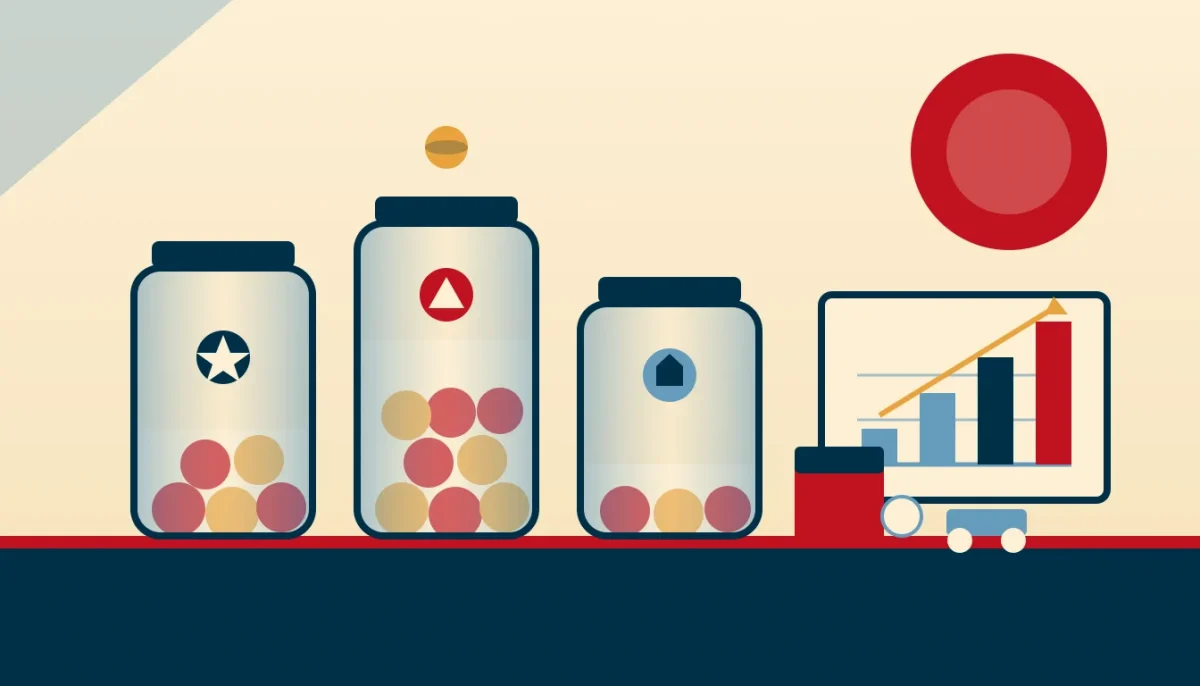
To teach kids about saving money, tie saving to something they actually want, make the progress visible, and let them feel the tradeoff themselves. Lectures about “the future” bounce off a seven-year-old. A clear jar slowly filling toward a LEGO set does not.
I’m a journalist who has written about money for years, and the habits below are the ones that hold up in real kitchens, not just in parenting articles. Nothing here is a rule. Adjust it to your child’s age and your budget.
The 8 habits at a glance
- Pick a goal your child cares about.
- Use clear jars so progress is visible.
- Split money into save, spend and give.
- Consider matching what they save.
- Practice waiting and talk through tradeoffs.
- Add a simple budget for older kids.
- Move to a real savings account when they’re ready.
- Let them see you save and say it out loud.
Start with a goal a child cares about
“Save for college” means nothing to a second grader. “Save for the $40 LEGO set” does.
Try this script: “That costs $40. You get $5 a week. How many weeks is that?” Let them do the math, even if it takes a minute and a few false starts on the back of an envelope. Eight weeks is a very long time at that age, so put a small goal first and a bigger one later.
This is also the honest answer to “how do I get my child to save?” Make it their goal, not yours.
Clear jars and visible progress
Use a clear jar, not an opaque piggy bank. Kids need to see the pile grow. Tape a picture of the goal on the front and draw a line for each week, so the distance between “now” and “mine” shrinks where they can see it.
Making saving fun is mostly this: a chart, a sticker, a countdown. Dull is the enemy. A few money lessons from board games make a good rainy-day supplement, because losing fake money stings far less than losing the real thing.
Split money into save, spend and give
Three jars, three jobs. The point is the habit of dividing money before spending it.

Save
Money for a bigger goal. It stays put until the goal is met.

Spend
Money they can waste on candy if they want. Yes, really.

Give
A little for a cause or a friend’s gift. It shows that money has uses beyond you.
There’s no magic split. As examples only, some families start with half in savings and others with a quarter, and what matters is picking one you can keep up for months while letting the child have a say.
Worked example (November 2026)
Your child gets a $10 weekly allowance and wants a $40 toy. If $5 goes to the save jar each week, the toy is eight weeks away. If you add $1 for every $4 saved, that’s $6.25 a week, so about six and a half weeks. Your numbers will differ. The habit is the point.
Matching a child’s savings: a parent’s option
Matching is optional, and it’s your call. It mimics an employer’s retirement match, and kids get the idea fast: save more, get more.
Keep the match modest and predictable, and tell them up front. If you cap it, say so. Surprises are for birthdays, not for rules.
Teaching waiting and tradeoffs
Here’s the hard part. Your child will want the thing now, and the saved money is sitting right there in the jar, looking at them.
Don’t rescue them, and don’t scold. Ask: “You can buy the small toy today, or keep saving for the big one. What do you want?” Either answer is a lesson. Buying early and regretting it is a cheap lesson at age eight and an expensive one at thirty.
For more everyday ideas, see my list of 10 easy frugal lessons to teach your kids.
Introduce a simple budget for older kids
Start around ten or eleven with a one-page list: money in, money out, money saved. Give them a set amount for things like phone-game purchases or movie money, and let them manage it.
When they run out two weeks early, don’t top it up. That empty wallet teaches budgeting better than any worksheet I’ve seen. Older kids can also learn why starting early matters through simple compound interest examples.
When to move to a real savings account
A good time to switch is when the jar holds more than the child can easily keep track of, or when they’re old enough to grasp interest. Take them to the bank, let them hand over the deposit, and show them the statement.
Ask about age rules, fees and minimums first. Rates change, so check current ones before you pick an account.
Let them see you do it
Kids copy what you do. When you pass on something, say why: “I’m skipping that, we’re saving for the trip.” That one sentence teaches more than a week of allowance talks.
For a wider view, see my guides on teaching kids about money and money lessons by age.
This is general education, not personal financial advice. Savings products and their terms vary, so check with the institution.
References
- Consumer Financial Protection Bureau — Youth financial education — Free guidance on building money habits in children and teens.
- FDIC — Money Smart — Financial education material, including resources for young people and banking basics.
FAQ
How much should a child save from their allowance?
There’s no correct figure. Choose a split your family can stick to, such as the half-or-a-quarter examples above, and adjust as the child’s goals change.
How can I make saving fun for kids?
Make it visible and playful: clear jars, a goal picture, weekly marks, stickers, board games with pretend money.
When can a child open a savings account?
It depends on the bank. Many offer accounts for minors, usually with an adult as joint owner or custodian. Ask about age rules, fees and minimums.
How do I teach kids to budget?
Give older kids a fixed amount and a simple money-in, money-out, money-saved list. Then let them live with the result.